"What's on my mind?" a certain social media app asked me this morning. Honestly, for some reason, what was on my mind was the word vestibule, particularly vestibules as places worth mentioning in popular song.
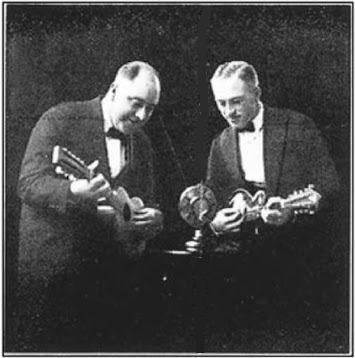
When Helen Kane boop-boop-a-dooped her way toward musical stardom by singing the song "That's My Weakness Now" in 1928, she did not mention a vestibule. When Cliff Edwards, aka Ukulele Ike, recorded it a few months later, he did. And there was something in the tone of his voice that suggested more things went on in vestibules than I was aware of.
Helen Kane wasn't the first to record it. Among the others were Paul Whiteman's band with the Rhythm Boys, including a young Bing Crosby. The database doesn't list any other women singing it, though. Is it wrong?
This also made me want to go find the original sheet music to see what original verses Helen might have left out to do her boop-booping, including with the vestibule reference -- if it was in the original publication.
I guess I'm not really tempted to write a musicology master's thesis on the significance of the vestibule in popular song lyrics, if someone else hasn't done it already, or doesn't see this post and beat me to it.
But, honestly, from Sam Stept & Bud Green to Chuck Berry to Bruce Springsteen, They Might Be Giants, and Wu-Tang Clan, they've all been to the vestibule for inspiration. You could look it up! My favorite discovery was a John Prine song I had never heard!
Kane's version, says CatsPyjamas1 at youtube, <<Charted at #5 in 1928. Helen's first record release. Also #17 for Russ Morgan in 1949. With the Nat Shilkret Orchestra. Also recorded by Cliff Edwards in 1928. Written by Sam H. Stept and Bud Green. Recorded July 16, 1928. B-side is "Get Out and Get Under the Moon".>>
If you haven't guessed by now, this post is an attempt to salvage all the impulsive research that I did on Facebook this morning and post it out here where folks on the free and equal web can see it. It will probably take me a couple of visits to add all the links and lyrics here, because I started this with several apps on my smartphone and my eyes are getting tired.
I sure found out a lot about vestibules in popular song. But I'll have to edit this on my laptop to add some YouTube videos!
End of the first draft at 12:39 on Friday the 13th of June 2025, with some updating a dozen days later.
Another YouTube user has built a 30-song Frank Crumit playlist, so I'll be listening to his great old-time songs -- and for the jangly sound of the tiple! (What's a tiple?)
I think "Ukulele Lady" was the first Crumit classic I ever heard... and I think my mother sang "What Kind of Noise..." On both, it sounds like Frank and accompanists used uke, maybe a mandolin-family instrument, and other backing instruments, but I don't hear a tiple... and the image with the second video looks to be another member of the ukulele family, an eight-string "taropatch."
I haven't even seen the A Complete Unknown Dylan-goes-electric movie yet, but Facebook discussions around it and conversations online with 1960s music scene survivors have really sent me down a week-long memory search and musical rabbit hole. (Come to think of it, I'm much more successful at being a complete unknown than he is.)
For one of those Facebook conversations, I assembled this musical still-life photograph, which brought back more memories, eventually hypertext-assisted into this blog post. But I started out slow, drawn back into playing old songs from those books for the living room furniture. For instance, I couldn't believe that the 1963 M. Witmark and Sons portfolio of songs from Dylan's second album (purchased new, when $1.95 was a non-trivial sum for a high school kid) came with piano arrangements, with little chord diagrams for guitar players. I also have the similar volume for his third album.
Guitarists reading this will be charmed to learn that book gave the guitar chords for playing "Blowin' in the Wind" in the key of Eb -- without suggesting use of a capo. "Girl of the North Country" was in Ab. (I still have never mastered the Db chord fingering it suggested, although the Eb 7th fingering has come in handy, pushed up a half step.) In any case, these were not keys I could play or sing in, so the book was a fine education in chord transposition.
However, "With God on Our Side" was presented in the key of C, where Dylan played it, and I see pencil notes indicating that 16-year-old me was already figuring out the harmonica solo! Unfortunately, or fortunately, my voice couldn't hit the high notes in that one, which may be why I backed off on the idea of singing it in a 1964 "hootenanny" at my high school. Or maybe I was just chicken. It was a Catholic high school, better at teaching grammar than progressive politics, although mimeo copies of "The John Birch Society" were circulating thanks to one teacher, making me a Chad Mitchell Trio fan.
I did sing San Francisco Bay Blues in that hootenanny, with the guitar and the harmonica, and some classmate introduced me saying I sounded "something like Bob Dylan, but that's not a bad thing." Actually, I learned the Jesse Fuller song from a transcription of a Ramblin' Jack Elliott performance, not from Dylan, and I don't think the emcee had never heard me sing or play; I think he was just judging by the hardware around my neck.
Thanks to Jeannie Brand-Derienzo, another Facebook friend, for sending me that mint copy of her dad Oscar Brand's instruction book, which was where I started learning to play the guitar. I think I traded away my original copy, and my first guitar, for my first banjo -- while I was still in high school. I still have an LP of Oscar singing historical satirical songs like, "A dollar ain't a dollar anymore" and "The Dodger Song," which still seem quite timely. (Feel free to join in while you read the rest of this. The lyrics are on those two links, one an Aaron Copland arrangement, but I prefer Oscar's singing below.) I also have several of Oscar's books and song collections.
I never did get to meet Oscar Brand, or even see him in person, but his books, records and broadcasting career were a huge part of my 1960s folk music education -- and I appreciate his work even more recently, thanks to YouTube's sharing of clips from his Canadian television show, "Let's Sing Out," with guests including musical heroes of mine who I never saw on American TV, including Dave Van Ronk, Joni Mitchell and the Jim Kweskin Jug Band. Oscar's WNYC radio show "Folk Song Festival" is online in bits and pieces too, including clips from his 1961 interview with a very young Bob Dylan, making up stories about his past. But over the years coffee houses (The Exit in New Haven, the Sounding Board in Hartford), plus bars, clubs and concerts did give me a chance to hear -- and even meet -- some of those musical heroes in person. And get on stage myself. At Pinewoods, along with the banjo lessons with Paul Brown, I took classes with the great Irish sean nos singer Joe Heaney, Janette Carter (founder of the Carter Family Fold here in Virginia), west coast oldtime music encyclopedia Hank Bradley, singer and dance caller & teacher Sandy Bradley from Seattle, the Horse Flies from Ithaca, and more. Some of those other Pinewoods faces have reappeared in other states and other decades, including a hammered dulcimer player I met at a Blacksburg jam session who figured out we had been "campers" at Pinewoods that same week some 35 years earlier.
That banjo had hung on the wall for a dozen years before I took learning it seriously, first from books by Pete Seeger and Peggy Seeger, then some recorded lessons by the late Happy Traum, whose Homespun Tapes banjo course I won in a photo contest at Pickin' magazine. My entry was a picture of Connecticut fiddler Will Welling at a New England Fiddle Contest in Hartford. Will gave me a copy of his tune book in return for a copy of the picture, and I had it in my guitar case when I went to Pinewoods, which was also where I acquired my first mandolin and started to pick tunes out of that book over the coming weeks -- and years.
But guitar with Hank Bradley and banjo with Paul Brown were my official instrumental classes at Pinewoods in 1978 or '79. Paul played more fiddle in the next class I took with him, with Terri McMurray playing banjo and banjo-uke, and both of them sharing wonderful stories about the old-time musicians they had learned from in the '60s and '70s. That class was in 2015 at the Augusta Heritage Workshops in Elkins, West Virginia. (Paul and I had a lot of catching up to do come including two journalism careers, his with NPR, mine with newspapers and magazines. And now he's writing his own thoughtful newsletter about public affairs, while I dither around on Facebook and three intermittent blogs.)
I emphasized Paul in the Facebook post this longer essay is partly copied and pasted from, because he and I have a lot of mutual Facebook friends. And his banjo class really was great, but the two-week stay at Pinewoods also included folksong classes with older singers I admired, my first Appalachian clogging class with Bob Dalsemar (teacher) and Ruth Pershing (teacher, caller, and dance ethnograper), and meeting lots of new friends and dance partner.
Dance partners, especially. Come to think of it, "You'll love it; it's like Club Med in the woods," was a friend's motivating line that probably has never appeared in the Country Dance and Song Society brochures. CDSS was and is a great dance and music community, and I did try commuting from Hartford to New York on Amtrak for most of a year to keep a romance going with someone I met at Pinewoods. But the music pulled me in another direction -- grad school in anthropology and ethnomusicology at Wesleyan, which I started at the rate of a course a semester, my tuition paid by the newspaper where I worked -- whose generous fringe benefits probably helped keep away unions for 200+ years.
After a couple years of part-time study at Wesleyan, I'd been at the Hartford Courant for 11 years, and was able to "retire" the year the paper was sold to a chain. I cashed in my employee stock so that I could finish off my studies full-time, including a 10-week research summer in County Mayo, Ireland, meeting great folks like John Hoban. To learn some jigs and reels, and accompany John Prine songs in the pub, I carried along that mandolin I'd bought at Pinewoods from a great guitar player named John Pearse. It was an old Martin with a broken side he had repaired while working for the Martin guitar company. He left to found his own company, making guitar strings among other things until his death in 2008. I still use the strings with his picture on the package. Greg Ryan, from New York, was my mandolin teacher in Ireland, picking up where I'd left off with classmate Jim Cowdery at Wesleyan. I kept that mandolin for 40 years before selling it to a friend who still plays it on stage and at jam sessions here in Southwestern Virginia.
Unlike Dylan, I did not take to songwriting or get very good at singing or entertaining audiences, or ever get to play on stage at the Newport Folk Festival. But, ironically, after I stumbled back into journalism, I did wind up on stage at Newport once, in the early 1990s. I was there taking pictures of my favorite harmony-singing trio, The Roches (shown earlier). I was trying to find a photo angle that would put enough pretty sailboats in the background to convince the editor of Soundings, a boating magazine, to put the picture on the cover, along with my article about "boats and music." Her reply, "Nope, boats have to be in the foreground on the cover."
But the article and a few pictures did run inside the magazine, and living around the corner from Soundings in Essex, Conn., also put me around the corner from the Griswold Inn, which briefly landed me and that old mandolin in a sea chantey singing group (Cliff Haslam & the Jovial Crew). We even played the Mystic Sea Music Festival once, around 1992, before I went off to grad school again, at UNC in Chapel Hill... which in a roundabout way brought me here to Southwestern Virginia, retired from teaching journalism, and playing old time music at jam sessions and dances. (Maybe this is the summer I'll get to the Mystic festival's successor, the Connecticut Sea Music Festival, with its roots in Cliff Haslam's Griswold Inn sessions. Alas, it's usually the same weekend as the Mount Airy Fiddler's Convention in North Carolina, which has become an annual ritual for me too.)
No wonder my house and brain are so cluttered with instruments and the musical memories sampled in that photograph. By the way, only the Burl Ives book and the 1930s Kay mandolin in that picture were acquired "second-hand," but it is all secondhand music, full of memories and history, and that's what I like about it.
It's not entirely relevant to this musical discussion, but (also in a roundabout way) my 1978-83 master's degree in ethnomusicology led to a 1988 master's about hypertext, which is why there are 30 or more links here to Web pages, YouTube videos and podcasts. A late-in-life diagnosis of ADHD may have more than a little to do with it too, and I hope some readers find them as enjoyably distracting as I did. Onward...
The Golden Melody Boys, who I've read about at Discogs and OldTimeBlues, were also The Georgia Melody Boys -- perhaps a case of using different names for different record labels, since they were from Cedar Rapids, Iowa, not Georgia. I'm glad that 78 RPM record collectors have preserved some of their recordings.. and have even put them on youtube.
Here are a few, starting with an embedded video of the most recent I've heard...
Goin' to have 'lasses in the morning (an Old Dan Tucker variation?):
I'll continue adding their recordings to a Golden Melody Boys YouTube playlist as kind souls share songs from old 78s there! At first I was surprised that YouTube's nine songs seemed to be more of their recordings than the Discogs record-collector database for the Georgia Melody Boys -- but then I discovered the two-names situation and saw that Discogs lists them separately, with four two-sided records as "Georgia" on the Broadway label, all duplicates of songs from their seven two-sided records as "Golden" on Paramount. YouTube has some catching up to do; nine down, five to go, and maybe one of those five is already there -- since whoever uploaded Side A probably did Side B too, unless it was too damaged to digitize.
Discogs identifies the singers and players as Phil Featherstone on mandolin and sometimes harmonica, andDempsey Jones on tiple, and as writer of their two-part dialog, "Uncle Abner and Elmer at the Rehearsal."
I hope to find more and better (less scratchy) transcriptions eventually, but from my early listening, the duet neatly illustrates my feelings about the two instruments... that the mandolin is better suited to melody or chord-melody playing, while the Tiple works best as a rhythm-chord instrument, given its doubled and tripled strings in ukulele tuning.
New to the tiple? Being tuned like a ukulele (gCea or aDf#b) means that when played at the same fret, the three lowest-pitched double and triple-string courses make a major chord (C for some players, D for others), while the three highest pitched make the relative minor chord. Sliding those positions up or down the neck can be very satisfying.
Since a ukulele playing friend of mine is learning the mandolin, and I have mandolins, ukes and a tiple, maybe we can work up such a duet.
Reminder to self: Put new strings on the tiple! When the steel string bronze windings wear out, leaving little gaps, those nice sliding chords you hear on this recording slice through the calluses on my favorite left hand fingertips and can leave behind little splinters of bronze wire. Ouch!
(Yes, I've replaced the strings since writing the first draft of this. Added that YouTube playlist too.)
Some wonderful songs here, including "Teddy Bears' Picnic," "I Told Them All About You," "Smiles" and more... This is last night's episode, Number 1374 of Craig Ventresco and Meredith Axelrod's YouTube and Facebook streamed "KitchenCast," an almost-nightly live event that began when the pandemic cut into their local gigs in 2020. Posting this episode here will help me share it, find it again, and -- as a bonus -- remind myself how to embed a YouTube video in Blogger, which I haven't been using very often recently. More examples and some extras from my Department of Compulsive Research below!
Just to see if I've got that embedding technique down, here's a one-song YouTube post from Meredith and Craig, from before the start of their pandemic streaming show four and a half years ago, "The Cubanola Glide," which I like because the town I live in has old Cubanola Cigar advertising painted on the walls of a couple of downtown buildings. I also like Meredith's ukulele playing, and the fact that they make eye contact with each other more than they do when they are watching Facebook and YouTube comment streams like they do in the live Kitchen Cast.
If you'd like to sing along, I found the sheet music a while ago. It looks like Meredith and Craig are playing in the ukulele and guitar friendly keys of G and C, while the original (piano) sheet music has the verses in Bb and the chorus in Eb.
By the way, they are both right-handed, but their Facebook stream and occasional YouTube clips appear with the image reversed. This "Just Another Day Wasted Away" clip not only shows that phenomenon, it also has some lovely harmonizing and "voice trumpet" or "blue blowing" by Meredith.
Meanwhile, for old-song fans, here are the "Second Hand Songs" pages for the tunes I've mentioned above:
In a rare blogging crossover, it seemed appropriate to write in my other blog today about the Cardinal News article tracing the history of The Crooked Road, Virginia's Heritage Music Trail, and put a link to that "Other Journalism" blog here. That item turned into a personal collection of links and memories about Virginia newspaper websites, the Internet Archive, and a sneaky self-serving plug for a performance by "Bring the Feet," at the November 9 Floyd Contra Dance.
In its opening photo, look for my mandolin waiting on my chair, at the right. I'm in the background, wearing a tan "Dittyville" cap and holding a cup of coffee, talking to Bring the Feet's hammered dulcimer and keyboard virtuoso, Randy Marchany, in a plaid shirt, bottle of orange soda in hand.
More recently, when a Floyd fiddler was putting together a band for the (post-Covid) revived Floyd dance, she asked if I knew anything about New England contra dance music. I admitted to 30 years of dancing and a few occasions of sitting-in with legendary caller Ralph Sweet in Connecticut. More importantly, I tipped her off to Randy's "No Strings" past, and he mentioned that No Strings' bass player was also available. So a band was born... for at least one dance a year. (Actually, this is our fourth for 2024!)
I just realized that the other blog post, while mentioning that Cardinal News reporter Ralph Berrier Jr. is an old-time and bluegrass fiddler, failed to mention his band, The Java Brothers, or his book about the bluegrass music careers of his grandfather and great-uncle, "If Trouble Don't Kill Me." Here's a YouTube copy of a Java Brothers concert ...
The commenter who got my attention said they always thought the song was from the 1960s. (It's actually from the 1860s, as someone pointed out in the same discussion.)
While this was a more general blog at first, since 2009, Boblog has been for occasional writing about music, part of trying to differentiate my web writing spaces. My other blogs are JHeroes (old-time radio's portrayal of journalists) & Other Journalism, a general-purpose writerly blog, successor to stepno.com/oldblog. When I was teaching, they all sometimes served other purposes.
I have worked for two newspapers (one full time for 11 years), several magazines, four software companies, and six colleges and universities, counting part-time, freelance and student jobs. See stepno.com.